“Naked and Crazy”: Mental health Issue or Medical Emergency?
“Delirium” is a term that has historically been used to describe a sudden change in mental status due to an underlying health condition.¹ For example, a person may appear confused, disoriented, or psychotic. We use the term “naked and crazy” to identify behaviors that indicate a medical emergency.² People exhibiting delirium will generally remove clothing and act strangely. This is not a mental health issue—people exhibiting delirium are medically sick.³
Call 911 if a person is naked and acting crazy
Medical emergencies may be recognized by the way a person is acting. A sudden change in mental state is an emergency: call 911. When in doubt, send them out!® Look out for:
Confusion or an “in-and-out” mental state
Violent or bizarre behavior
Difficulty focusing
Disorganized thinking
Hallucinations or delusions
*This list is not exhaustive.
These signs may appear to be mental illness at first glance, but delirium is a medical emergency. Naked and crazy behaviors can be caused by underlying medical issues, such as organ failure or overdose. Physical signs of a medical emergency include:
Increased or abnormal strength
Restlessness
Unresponsive to pain
Sweating
High fever
This can be why they are naked
*This list is not exhaustive.
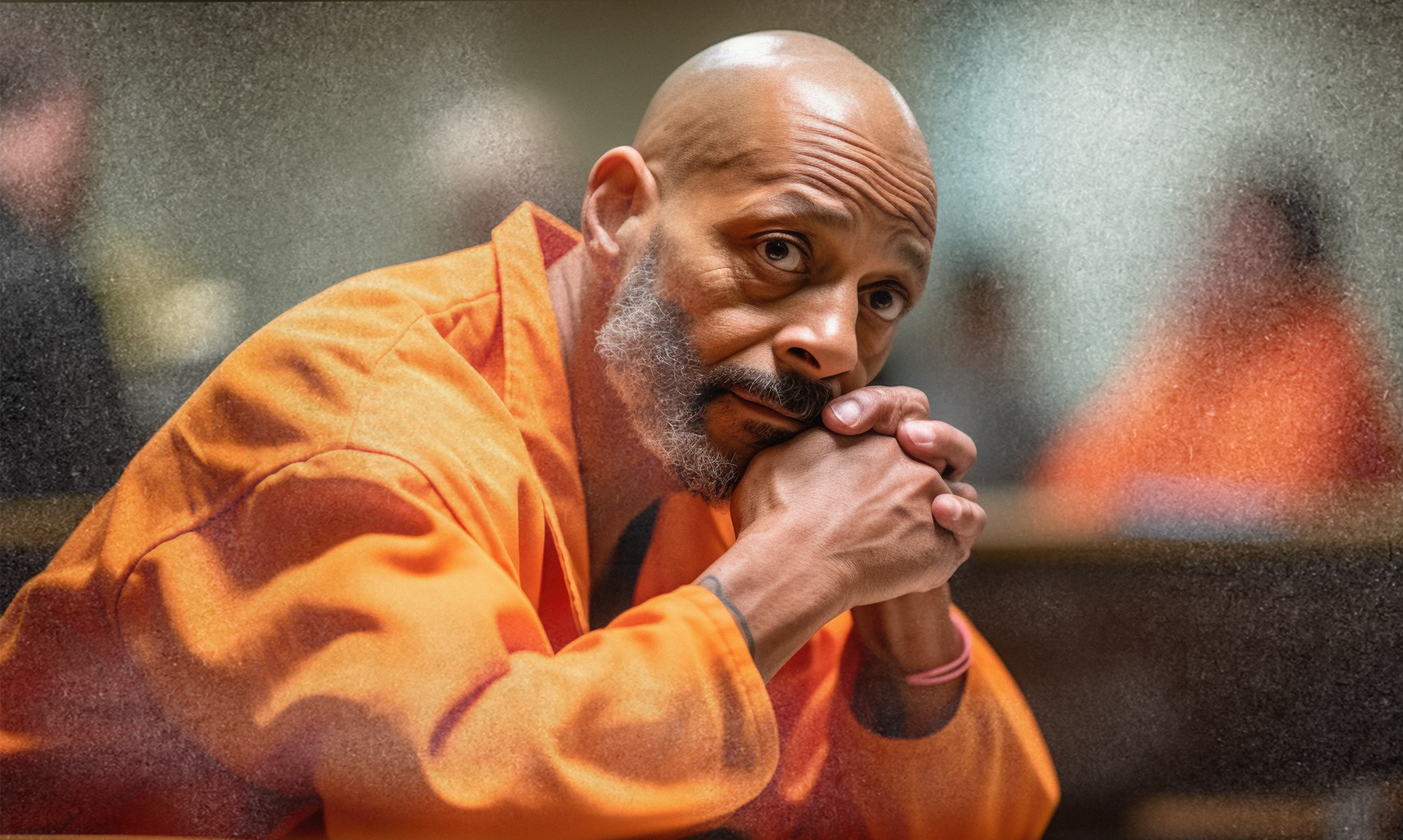
Delirium can occur at any point during incarceration. Call 911 if a person is naked and acting crazy.
Do NOT accept a naked and crazy person into the jail
Get clearance from the hospital BEFORE accepting a person who is naked and acting crazy into the jail. Do not wait for them to “calm down.” Call 911 and get them to a hospital. If the individual is out of control and cannot be securely transported, use restraint with caution. Delirium can increase the potential for injuries associated with use of force and physical restraint. Avoid restraints that impede the person’s breathing, such as spit masks, or kneeling on the person’s chest. Instead,
Have the person’s arms, legs, and head each assigned to a different person to prevent dogpiling
Get the person sitting upright to help with breathing
Be aware you are on camera
*This list is not exhaustive.
Tactics such as de-escalation or use of force are generally ineffective at controlling people who are naked and acting crazy. The individual may not understand or be able to follow commands during a medical episode and generally will not feel pain, so they won’t be controlled by it. Avoid tasing a person who is naked and acting crazy—they will likely not respond, and multiple strikes can lead to cardiac arrest. Use common sense when dealing with situations involving naked and crazy behaviors, and do NOT accept a naked and crazy person into the jail.
For more information, please contact training@sparktraining.us.
1. American Psychiatric Association. (2022). Neurocognitive disorders. In Diagnostic and statistical manual of mental disorders (5th ed., text rev.). https://doi.org/10.1176/appi.books.9780890425787.x17_Neurocognitive_Disorders
2. Minn. Stat. § 626.8437. https://www.revisor.mn.gov/statutes/cite/626.8437
3. Wilson, J. E., Mart, M. F., Cunningham, C., Shehabi, Y., Girard, T. D., MacLullich, A. M. J., Slooter, A. J. C., & Ely, E. W. (2020). Delirium. Nature Reviews Disease Primers, 6(1), 90. https://doi.org/10.1038/s41572-020-00223-4
Disclaimer
All materials have been prepared for general information purposes only. The information presented should be treated as guidelines, not rules. The information presented is not intended to establish a standard of medical care and is not a substitute for common sense. The information presented is not legal advice, is not to be acted on as such, may not be current, and is subject to change without notice. Each situation should be addressed on a case-by-case basis. When in doubt, send them out!®